
The GRAVHOUNDS unlock order that matters: Research Points, weapons, turrets and mods ranked by how much they improve every future run.
GRAVHOUNDS Upgrade Path: What to Unlock First
GRAVHOUNDS has two progression tracks, and only one of them is permanent. The run track — mods, turrets, resources — resets when you extract. The lab track — weapons, blueprints, Research Points — carries into every future run. Spending the second track badly is the most expensive mistake a new player can make, because it delays the moment the game opens up.
This guide gives the unlock order, the reasoning behind each step, and the traps that look like upgrades but are not.
Official source: GRAVHOUNDS Early Access FAQ ↗ — progression expands with more Gravhounds, jobs, worlds, enemies, weapons and upgrades during Early Access.
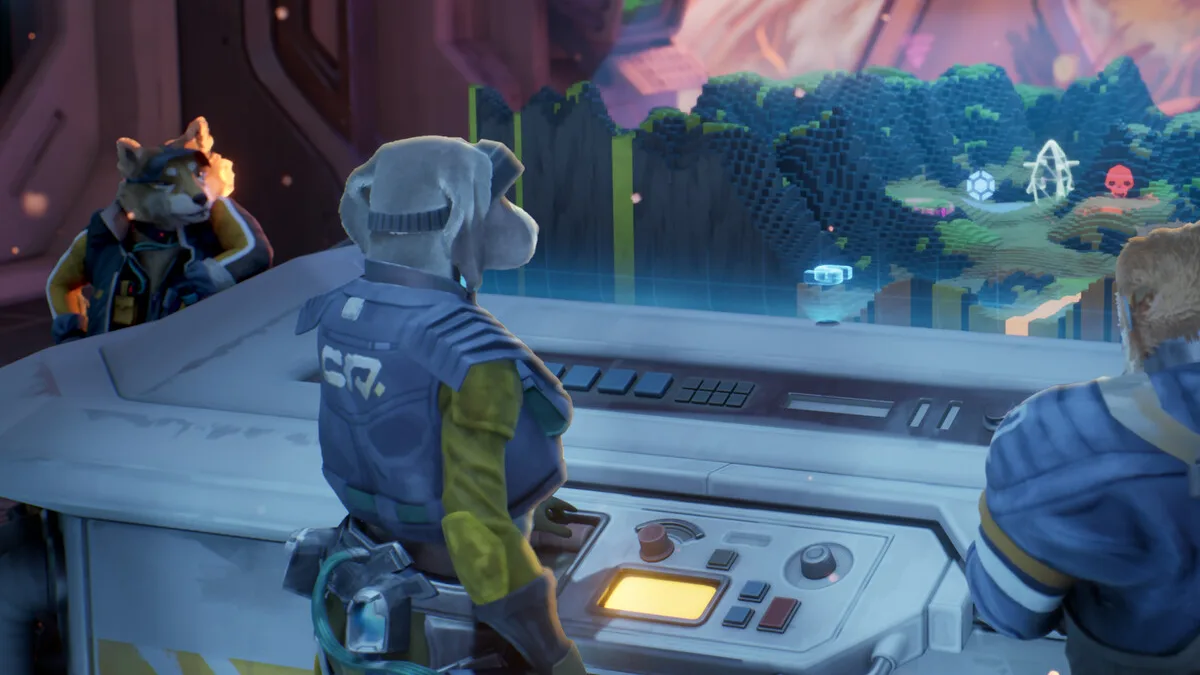
How progression actually works
Three currencies feed the lab:
- Research Points (RP) from milestones. These buy upgrades in the research tree.
- Blueprints found on planets. These unlock turrets, weapons and mods.
- Extracted resources that fund the upgrades themselves.
The important detail: RP comes from milestones, not from kills. A run that completes objectives and extracts generates far more research than a run that farms enemies and dies. Efficiency is the progression stat.
The unlock order
1. A second weapon
The tutorial weapon is fine for the first hour and a liability after that. A second weapon platform changes what pods can offer and gives you a real answer to shielded or ranged enemies.
Priority: rapid-fire or precision, whichever you did not start with. Explosive is fun but the least flexible as a first unlock.
2. The core turret family
Two direct-fire turrets and one area turret are the backbone of every base. Unlock the direct-fire upgrade tier before anything cosmetic, then the area turret.
Do not unlock a support turret before you own a damage turret to support.
3. Generator efficiency
Power upgrades are invisible and compounding. A more efficient generator means longer waves, fewer Electrium trips, and more time at the objective. This is the single most underrated unlock in the early tree.
4. The mod pool
Mods are the run's build space. Early on, unlock breadth over depth: two crit mods, two turret mods, one movement mod. Breadth gives the deck builder options; depth gives you a slightly better version of a deck you already have.
5. The Courtesy Turret line
Once you have the core turrets and a few mods, the Courtesy Turret becomes a scaling piece: upgraded, it can spawn higher-tier turrets you already own. It is a mid-game unlock that keeps paying.
6. Movement and survival
Dash upgrades, healing and shields are the least exciting unlocks and the ones that convert a good run into a successful extraction. Buy them before the third weapon.
The traps
Cosmetic upgrades. Skins and base decorations do nothing for the next run. Buy them last, if at all.
A third weapon before turret upgrades. Three weapons and a weak base means three ways to die at the collector.
Deep mod investment. Two ranks of one mod is worse than one rank of four mods, because the deck builder needs options more than power.
Skipping the generator. A base with strong turrets and weak power is a base that goes dark at the worst moment.
If two options cost the same and one is "more damage," take the one that improves uptime, movement or power. Damage is the easiest stat to get from mods.
Blueprint hunting order
Blueprints are found on planets, and the Star Map shows how many remain on each. Hunt in this order:
- The planet you can clear fastest. Blueprint density matters less than extraction reliability.
- The planet with a blueprint for a turret you already use. Upgrades beat new toys.
- The planet with a blueprint for a weapon you have unlocked. Same logic.
- Everything else. Completionism is a late-game goal, not an early one.
A blueprint you extract with is worth ten you die holding.
When to stop upgrading and start building
The lab is a means, not an end. The signal that you have enough progression is simple: you can build a base that survives a full wave without you standing in it, and you can extract from an amber-band planet with a full backpack.
At that point, stop buying upgrades for a run and start buying them for a build. The build guide explains how to turn a mod pool into a deck; the best build is the first one worth aiming at.
Progression by play style
| Play style | First unlock | Second | Avoid early |
|---|---|---|---|
| Solo | Movement / dash | Survival mod | Support turrets |
| Duo | Second weapon | Generator efficiency | Third weapon |
| Full pack | Turret damage | Courtesy Turret | Solo survival mods |
| Boss hunter | Crit mods | Precision weapon | Base cosmetics |
The table is not a rule. It is a correction for the most common misallocation in each play style.
FAQ
What are Research Points spent on? Permanent upgrades in the research tree: weapons, turrets, mods and utility.
Do I lose upgrades when I die? No. Lab progression is permanent; run loot is not.
What is the best first unlock? A second weapon, so pods stop offering only the tutorial gun.
Should I unlock everything before building a deck? No. Unlock enough breadth to build one focused deck, then play.
Do blueprints carry between runs? Once extracted, yes. A blueprint left on the planet is not unlocked.
Further reading
Summary
Second weapon, core turrets, generator efficiency, mod breadth, Courtesy Turret, survival. Buy uptime over damage and extract blueprints instead of chasing them. The progression guide covers the full lab; the tier list tells you which unlocks are worth the detour.
More GRAVHOUNDS Guides
Build a GRAVHOUNDS base that survives escalating swarms: site selection, four defensive layers, power placement and layouts for solo to four players.
A first-shift walkthrough for GRAVHOUNDS: what to mine, where to build, how pipes pay for themselves, and when to call the ship.
A complete GRAVHOUNDS build for hard planets: rapid-fire crit weapon, turret support deck, Dozer mines and the exact 10-card Mod Deck.
The best GRAVHOUNDS character for solo, duo, four-player packs and boss runs, with the reasoning and the loadout each hound enables.
A practical GRAVHOUNDS Juggernaut guide: arena preparation, phase behavior, turret placement, team roles and the mistakes that wipe the base.
How GRAVHOUNDS builds work: the 10-card Mod Deck, Showstoppers, weapon choices and the stack rules that decide whether a run snowballs.