
How GRAVHOUNDS builds work: the 10-card Mod Deck, Showstoppers, weapon choices and the stack rules that decide whether a run snowballs.
GRAVHOUNDS Build Guide: Mod Decks, Stacks and Weapons
GRAVHOUNDS builds are not decided by what drops. They are decided before the drop, in the Mod Deck Builder, and then confirmed by which reward pods you choose. That distinction is the whole system: the deck sets the pool, the pods draw from it, and your job is to keep the pool focused enough that every draw makes the build stronger.
This guide explains the deck rules, the four weapon platforms, the stack logic, and the three archetypes that work at launch.
Official source: GRAVHOUNDS on Steam ↗ — 60 mods, including 12 Showstoppers, plus four weapons and the Grav Beam.
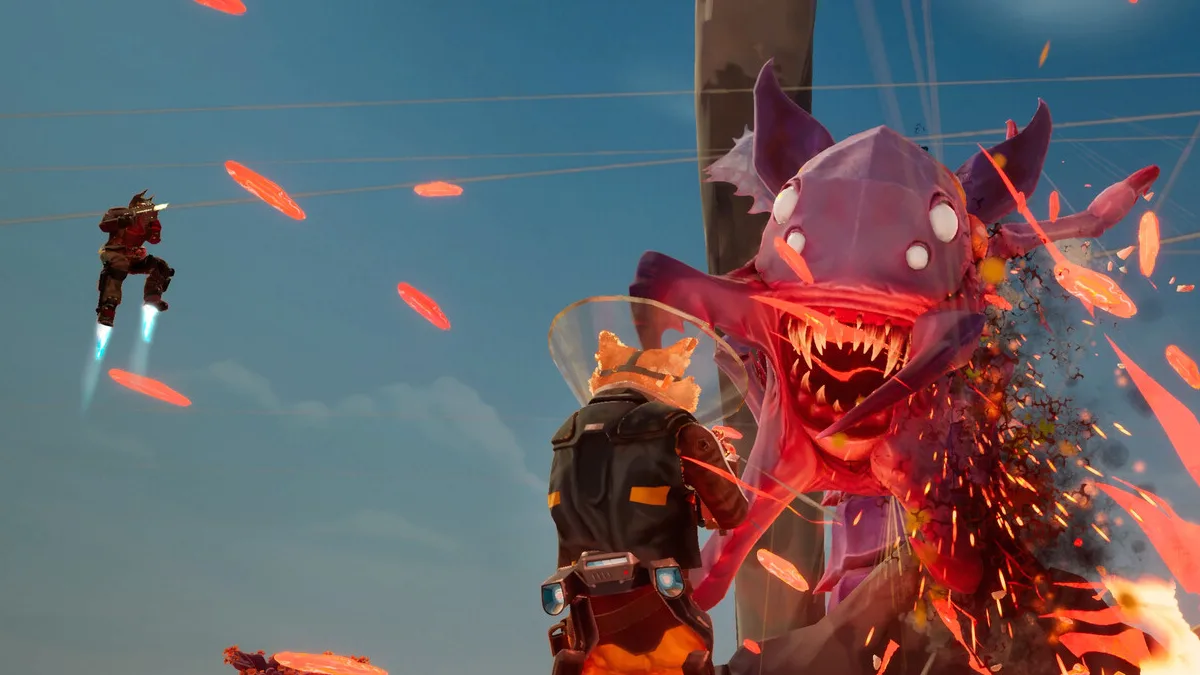
The Mod Deck Builder
Before a run you choose:
- 10 common mods from your unlocked pool.
- Up to 2 Showstoppers — the rare, build-defining mods.
- A weapon from those you have unlocked.
The deck determines what reward pods can offer. This is the most important sentence in the game's build system: pods do not offer the whole mod pool, only your deck. A narrow deck produces consistent pods. A wide deck produces variety, which in a twenty-minute run means inconsistency.
The first pod of a run offers every weapon you have unlocked, so the deck is also where you decide whether you are starting with the tutorial rifle or something better.
How to build a deck
- Pick one trigger. Crit, kill, turret damage, or movement. Pick one and build around it.
- Pick one delivery. Your weapon, your turrets, or your abilities. A build that splits damage across all three is a build with no multiplier.
- Add enablers, not more damage. A mod that makes your trigger happen more often is worth more than a flat damage mod.
- Leave two slots for survival. Movement, healing or shield. A glass build that dies at minute eight banks nothing.
- Choose Showstoppers last. They should amplify the deck you already built, not replace it.
The four weapons
The launch build has four weapon platforms plus the Grav Beam. They differ in range, ammo economy and how well they use mod triggers.
| Weapon type | Strength | Weakness | Best with |
|---|---|---|---|
| Rapid-fire | Consistent crit triggers | Low burst | Crit and stacking mods |
| Precision | High per-shot damage | Punishing misses | Weak-point and burst mods |
| Explosive | Crowd clear | Self-damage risk | Area and stagger mods |
| Support / utility | Enables turrets | Low solo damage | Turret and buff decks |
The Grav Beam is not a weapon slot in the usual sense. It grabs, throws and manipulates physics, and it is the reason a build with low raw damage can still control a wave. Throwing a heavy enemy into a turret line is damage your weapon did not have to deal.
Stacks: why the same mod twice is different
GRAVHOUNDS uses stacking bonuses, and the launch build leans into them. A stack is not just "more of the same number." Many mods change behavior at a threshold: the second copy might add a proc, the third might change the proc's target.
The practical rule: stack mods that trigger on the same event. If three mods all trigger on crit, one crit fires all three. If they trigger on crit, kill and reload, you need three separate events to get the same value.
This is also why the deck limit matters. Ten slots is enough for one trigger package plus survival, and not enough for two trigger packages.
The three launch archetypes
Crit stack
Rapid-fire weapon, crit-chance and crit-damage mods, plus on-crit procs. The build scales with fire rate and falls off when enemies have crit resistance or shields.
Strengths: single-target, boss damage, consistent. Weaknesses: ammo economy, crowd clear. Showstopper: anything that converts crits into area damage.
Turret commander
Support weapon, turret damage and turret uptime mods, plus a Courtesy Turret for extra bodies. The build does not need you to aim, which makes it the best choice for a player who wants to focus on building.
Strengths: base defense, co-op value, low mechanical demand. Weaknesses: weak while moving, dependent on the base surviving. Showstopper: a mod that duplicates or upgrades deployed turrets.
Physics / Grav Beam
Grav Beam upgrades, throw damage, stagger and area mods. The build turns the swarm into projectiles.
Strengths: crowd control, objective defense, high skill ceiling. Weaknesses: demands positioning, weaker against shielded or anchored enemies. Showstopper: a mod that turns thrown enemies into explosions.
Reward pod discipline
Every pod is a choice between three mods. The mistake is taking the rarest option instead of the one that completes your deck.
A simple priority:
- Does this complete my trigger package? Take it.
- Does this fix my weakest moment? Take it.
- Is this a Showstopper my deck can support? Take it.
- Otherwise, take the mod you can stack.
If none of the three fits, take the safest survival mod and move on. A pod is not a lottery; it is a shop with three items.
What changed at launch
Several demo-era build assumptions no longer hold:
- Rocket Turrets have a smaller blast radius and slower fire rate, so explosive turret builds are less dominant.
- Gooper acid no longer causes damage over time, so cleanse and resist mods are less mandatory.
- Tanky enemies are less durable, which makes single-target builds faster than they were in the demo.
- The Courtesy Turret can now spawn higher-tier turrets you have unlocked, making it a real build piece.
If you are following a demo build guide from October, check these four changes first.
Deck templates
Ten-card crit deck: crit chance ×2, crit damage ×2, fire rate, on-crit area, ammo refund, movement, heal-on-kill, flex.
Ten-card turret deck: turret damage ×2, turret fire rate, turret range, deploy speed, repair efficiency, generator efficiency, movement, heal, flex.
Ten-card physics deck: throw damage ×2, stagger, area on impact, Grav Beam range, Grav Beam speed, movement ×2, heal, flex.
The flex slot is where the Showstoppers go. Do not build a deck that only works with a Showstopper you might not draw.
A deck that comes online at minute fifteen is a deck that loses the first two waves. Choose mods that work immediately, then scale.
FAQ
How many mods can I take into a run? Ten common mods plus up to two Showstoppers.
Can I change my deck mid-run? No. The deck is set before the drop.
Do I keep mods between runs? The deck is a loadout, not loot. You keep unlocked mods permanently and choose a deck each run.
What is the best weapon for a beginner? Rapid-fire. It is forgiving, triggers crit mods often, and does not punish missed shots.
Are Showstoppers always better? No. A Showstopper your deck cannot support is worse than a common mod that completes it.
Further reading
Summary
Pick one trigger, one delivery, ten cards, two survival slots. Let the deck decide the pods, not the other way around. The best build is a worked example; the upgrade path explains how to unlock the mods that make it possible.
More GRAVHOUNDS Guides
A first-shift walkthrough for GRAVHOUNDS: what to mine, where to build, how pipes pay for themselves, and when to call the ship.
A complete GRAVHOUNDS build for hard planets: rapid-fire crit weapon, turret support deck, Dozer mines and the exact 10-card Mod Deck.
Build a GRAVHOUNDS base that survives escalating swarms: site selection, four defensive layers, power placement and layouts for solo to four players.
A practical GRAVHOUNDS Juggernaut guide: arena preparation, phase behavior, turret placement, team roles and the mistakes that wipe the base.
How GRAVHOUNDS character unlocks work, why demo progress does not carry over, and the fastest progression path to the full five-hound roster.
Every playable Gravhound at Early Access launch: Zane, Finn, Dozer, Selene and Luna, their abilities, stats and the co-op roles they fill.