
How GRAVHOUNDS multiplayer works: player-hosted lobbies, the best pack composition, role splits and the connection rules that keep a run stable.
GRAVHOUNDS Multiplayer Guide: Hosting, Roles and Co-op
GRAVHOUNDS is built for one to four players, and the difference between a good pack and a bad one is rarely aim. It is role clarity, host quality and the discipline to leave together.
This guide covers how multiplayer is hosted, how to split jobs, what to do when someone lags out, and the composition rules that make a four-player run easier than solo rather than harder.
Official source: GRAVHOUNDS on Steam ↗ — online co-op for up to four players, with player-hosted sessions.
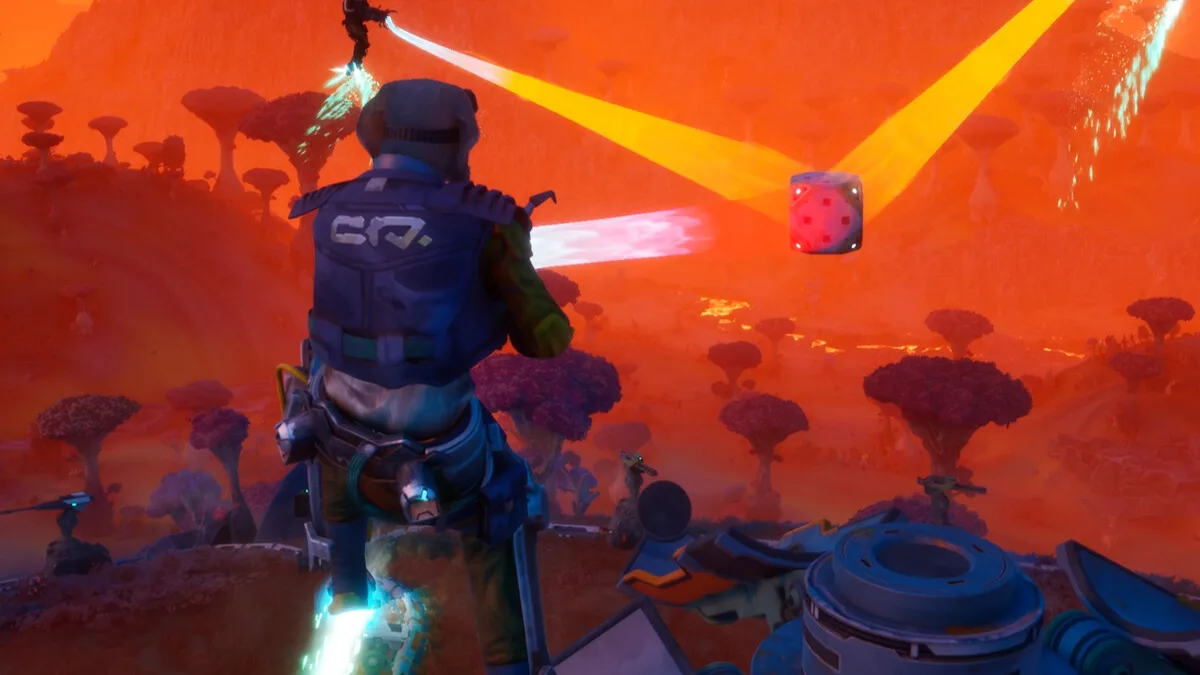
Player-hosted, not dedicated
GRAVHOUNDS uses player-hosted multiplayer. There is no dedicated server farm between you and your friends: one player's machine runs the session, and everyone else connects to it.
That has three consequences:
- Host hardware matters. A host on a weak PC or a bad connection degrades the run for everyone.
- Host location matters. The developers recommend a host in the same region as the pack.
- Host departure ends the session. If the host leaves, the lobby does not migrate; the run ends.
If you have a choice, the player with the best upload speed and the most stable connection should host, even if they are not the best player.
Before the first drop
- Finish the tutorial. Multiplayer unlocks before solo completion, but the tutorial teaches the collector and the pipe.
- Agree on a planet. Everyone should know whether this is a farming run, a blueprint run or a boss attempt.
- Agree on the extract caller. One player, not a committee.
- Agree on roles. Four players doing the same job is four players doing one job badly.
The four roles
| Role | Owns | Does not do |
|---|---|---|
| Anchor | Collector, generator, repairs | Wander to the far resource field |
| Builder | Pipes, turrets, kill box | Chase kills outside the base |
| Runner | Objectives, blueprints, far nodes | Rebuild the base mid-wave |
| Floater | Revives, screens, gap-filling | Start a private second base |
In a duo, the anchor and runner merge. In a trio, the floater is the swing role. In a four-stack, every role has an owner and the run feels easy.
The most common pack failure is four runners: everyone pushes objectives, nobody builds, and the collector dies to the first real wave.
Communication that matters
You do not need constant chatter. You need five callouts:
- "Power down." The grid is out and a lane is blind.
- "Goopers left." Ranged enemies are out of turret range.
- "Blueprint secured." The run has paid out; extraction is now the priority.
- "Calling it." The extract decision has been made.
- "Leave me." A downed player is telling the pack not to trade the run for a revive.
The last one is the hardest and the most valuable. A pack that cannot say "leave me" loses runs to heroism.
Hosting and connection problems
If the host lags: everyone feels it. The host should lower settings before the run, not during it.
If a client lags: they will see enemies teleport and turrets fire late. They should avoid the builder role, because misplaced structures persist.
If someone disconnects: the session continues for the host and remaining players. The disconnected player loses their run loot unless they rejoin before extraction — and rejoin behavior is not guaranteed, so treat a disconnect as a lost run for that player.
If the host crashes: the session ends. This is the strongest argument for the most stable machine hosting, not the best player.
Pack composition
A four-player pack should cover:
- Survival: Finn's Play Dead.
- Area denial: Dozer's mines.
- Crowd control: Zane's Bark.
- Flex: Selene or Luna, or a second Finn.
Two Finns is strong but leaves the base without mines. Two Dozers is strong but leaves the corridor without a knockback. The characters guide covers each kit; the best character ranks them by mode.
Scaling: what changes with more players
More players means more enemies, but also more turrets, weapons and revives. The run is easier if the pack builds one base and harder if it builds four.
Rules for scaling:
- One kill box, not four. Everyone builds into the same defense.
- Split resource roles. One Titanium, one Electrium, one blueprint hunter, one builder.
- Share the turret budget. A player with spare Titanium should upgrade the pack's kill box, not start a private fort.
- Extract together. Four players leaving at four different times is four chances to lose someone.
The difficulty guide has the full scaling table.
In a four-stack, the player who does "nothing" — repairs, revives, tops up the generator, fills the failing lane — is the reason the pack extracts. Assign the role explicitly.
Multiplayer and progression
Character progression, unlocks and blueprints are tied to each player's account. A friend's Finn is not your Finn, and their blueprint is not your blueprint.
Practical implications:
- Do not assume a blueprint drop is shared. Confirm how your group handles blueprint pickups before the run.
- Do not assume a character is available. Each player brings their own roster.
- Do not assume mods are shared. Decks are personal.
The progression guide covers what carries between runs.
FAQ
How many players can play GRAVHOUNDS? Up to four in online co-op, plus solo.
Are there dedicated servers? No. Sessions are player-hosted.
Does the host need the best PC? Ideally yes. Host hardware and connection affect everyone.
Can players join mid-run? Join behavior is limited; plan to start together.
Is crossplay supported? Not announced. The crossplay guide covers what is confirmed.
Further reading
Summary
Best connection hosts, four roles, one base, five callouts, leave together. The crossplay guide covers platform questions; the characters guide covers who plays what.
More GRAVHOUNDS Guides
Build a GRAVHOUNDS base that survives escalating swarms: site selection, four defensive layers, power placement and layouts for solo to four players.
A first-shift walkthrough for GRAVHOUNDS: what to mine, where to build, how pipes pay for themselves, and when to call the ship.
A complete GRAVHOUNDS build for hard planets: rapid-fire crit weapon, turret support deck, Dozer mines and the exact 10-card Mod Deck.
The best GRAVHOUNDS character for solo, duo, four-player packs and boss runs, with the reasoning and the loadout each hound enables.
A practical GRAVHOUNDS Juggernaut guide: arena preparation, phase behavior, turret placement, team roles and the mistakes that wipe the base.
How GRAVHOUNDS builds work: the 10-card Mod Deck, Showstoppers, weapon choices and the stack rules that decide whether a run snowballs.